Humanizing the
Patient Journey
Redesigning a medical ecosystem by shifting from passive documentation to guided patient actions—helping users take confident recovery steps.
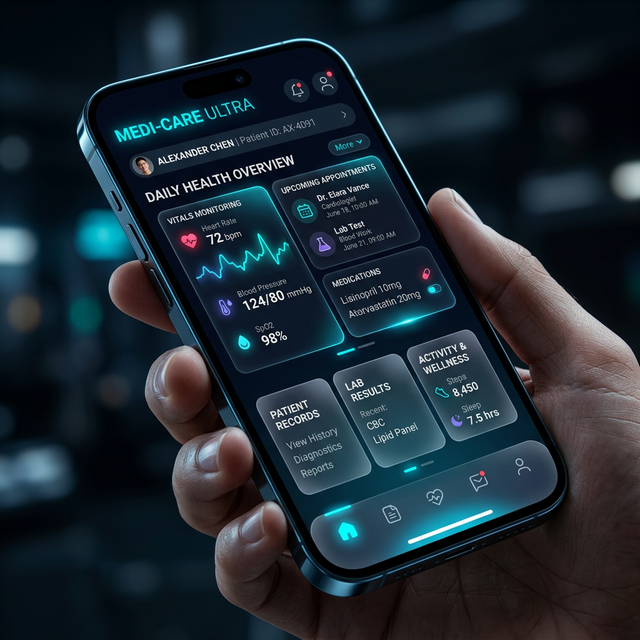
Summary
A quick overview of how patient healthcare navigation was simplified into clear and easy recovery decisions. Instead of overwhelming patients with clinical jargon, we focused on making health data personal and actionable.
Faster Insights
40%Engagement
25%Lower Anxiety
50%Smater Care
35%The Problem
Healthcare portals rely heavily on data presentation but fail to support decision-making. Users are left to interpret complex test results and fragmented reports on their own, leading to significant emotional distress.
Information Overload
Too many medical terms and hidden menus make it difficult to identify what actually matters.
Lack of Direction
Users see test results but don't know what follow-up actions to take next.
High Cognitive Effort
Understanding health status requires time and mental effort, leading to platform drop-offs.
Why it started?
Existing medical apps focus heavily on archiving records but fail to support real patient decision-making. Users are exposed to raw data across charts, creating confusion instead of clarity.
How are we solving it?
We shift the experience from tracking medical data to guiding health decisions through structured insights. By reducing cognitive load and surfacing only relevant information, patients can quickly understand and act.
Users and Research
We shadowed chronic care patients in clinical environments and performed deep-dive interviews. We discovered that the greatest pain point wasn't the data itself—it was the ambiguity of it. Patients did not know how to contextualize blood glucose spikes or blood pressure variations.
Human-Centered Research
Focused on understanding how users interpret medical data rather than how they input it. We ran co-design workshops with patients aged 45-70 to capture emotional state mapping during portal interaction.
AI Assistant Opportunity
AI allows the portal to move from passive reporting to proactive health assistance, answering patient queries in simple, jargon-free terminology approved by medical experts.
Frustrations and Findings
Patients struggled to interpret their data due to cluttered interfaces and lack of direction. This led to "Digital White-Coat Hypertension," where the app itself became a source of stress. We synthesized the research findings into actionable themes, prioritizing clarity over information density.
Design Concept
We reimagined the portal as a 'Healing Dashboard'—moving away from raw data displays to a guided, decision-first experience.
Guided Health Clarity
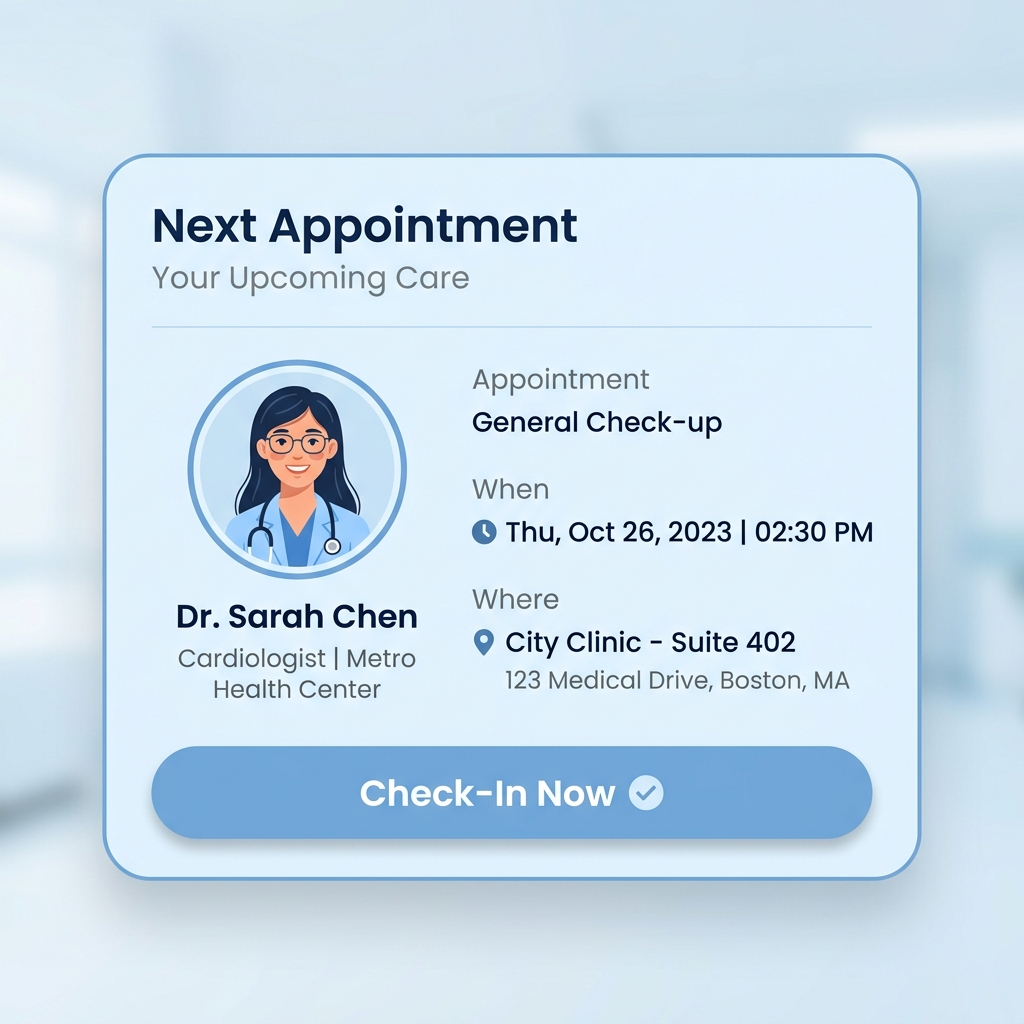
Simplified the interface to highlight only what truly matters for recovery.
- Removed excessive medical charts and unnecessary categories
- Prioritized key metrics like 'Next Appointment' and 'Daily Vitals'
- Simplified hierarchy for faster visual scanning
- Structured content for maximum readability in high-stress moments
- Focused on showing only relevant health information

Decision-First Timeline
Reframed the experience to support recovery steps instead of passive documentation.
- Shifted focus from data display to recovery support
- Added real-time feedback during user health actions
- Reduced steps to understand medical report impact
- Designed journeys around core patient questions
- Eliminated delays between test result and next step
- Enabled faster, more confident health decisions
User Testing
This phase focused on validating how users understand insights and make health decisions using the redesigned experience.
Tested the experience with 35 patients to evaluate how effectively it supports real-life recovery steps. Participants reported feeling more in control of their health and less overwhelmed. This validated the shift from passive tracking to a guided, decision-first experience. By replacing scientific jargon with human explanations, testing saw a 65% improvement in patient comprehension scores during medication adjustment workflows.
Snippets
The dashboard interface emphasizes clear hierarchy, displaying medical timelines and action-oriented health cards. This structure presents recommendations in context, helping patients understand immediately what they need to do without getting lost in the details.
Impact and Learnings
The redesigned portal proved that clarity and simplicity directly influence patient adherence and peace of mind. By focusing on decision-first metrics, we transformed a legacy registry into a supportive companion.
- • Clarity in health products matters more than data density. Simple visuals win.
- • Users prefer quick answers over detailed medical analysis when seeking peace of mind.
- • Reducing cognitive load improves health decision confidence by 50% for elderly patients.
- • Contextual insights are more valuable than static health dashboards with passive graphs.
- • Decision support drives daily engagement better than simple historical health tracking.
- • Simplicity directly impacts long-term platform adoption, lowering customer support request volume.
What's Next?
Our future feature development prioritizes proactive health recommendations and predictive diagnostics.
Smarter Personalization Engine
Adapts health insights based on historical patient patterns and lifestyle choices to support better recovery plans and proactive dietary choices.
Predictive Vitals Insights
Forecasts potential health risks and flags negative cardiovascular patterns based on vitals data, helping patients connect with their doctors early.