Real-time
Logistics at Scale
A multi-tenant SaaS platform built for high-velocity fleets, focusing on predictive maintenance and real-time operational visibility.
Summary
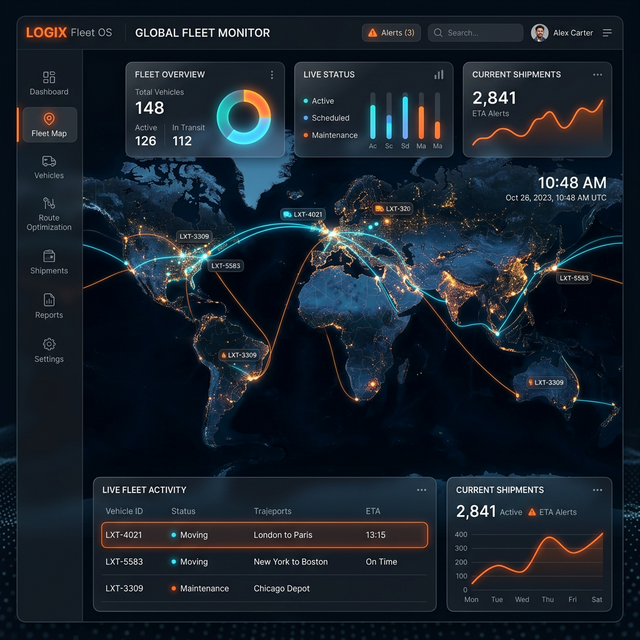
Transformed the chaotic world of fleet dispatching into a streamlined, automated workflow. By integrating real-time GPS data with predictive AI, we enabled managers to anticipate delays before they happened.
Fuel Savings
18%Route Efficiency
30%Uptime
98%The Problem
Legacy fleet systems were "reactive"—drivers only reported problems after they occurred. This led to massive downtime, inefficient routing, and ballooning operational costs.
Reactive Maintenance
Vehicles broke down on the road, causing delayed deliveries and high towing costs.
Alert Fatigue
Dispatchers were overwhelmed by hundreds of meaningless notifications daily.
Communication Gaps
Drivers relied on unsafe, manual phone calls to report status updates.
Why it started?
The existing software was built a decade ago when GPS tracking was enough. Today, the sheer volume of data generated by modern vehicle telematics requires a system capable of filtering noise from actionable insight.
How are we solving it?
By building an intelligent, proactive dispatch platform. We utilize AI to group and prioritize alerts, and introduce a voice-first driver application to ensure safe, continuous communication.
Users and Research
We spent time shadowing dispatchers in their control rooms and riding along with long-haul drivers. Dispatchers needed a God-eye view that wasn't cluttered, while drivers needed a voice-first, hands-free interface to log status updates safely while on the road.
Research Approach
Ride-alongs and dispatcher shadowing revealed the intense, multi-tasking nature of both roles.
Core Opportunity
To transition the dispatcher UI from 'information display' to 'action-oriented triage.'
Frustrations and Findings
A major pain point was "alert fatigue." Dispatchers were bombarded with hundreds of minor geofence notifications daily, causing them to miss critical alerts like engine faults or route deviations. We realized we needed an intelligent filtering and escalation system.
Design Concept
We designed a dual-interface ecosystem: a high-density, triaged dashboard for dispatchers, and a high-contrast, voice-enabled mobile app for drivers.
Dispatcher Triage View
Surfacing critical fleet health metrics and routing exceptions.
- Smart alert grouping (e.g., '3 trucks delayed on Route 66').
- Contextual map overlays showing traffic and weather overlays.
- Quick-action communication panel to broadcast messages to specific routes.
- Drag-and-drop rerouting interface.
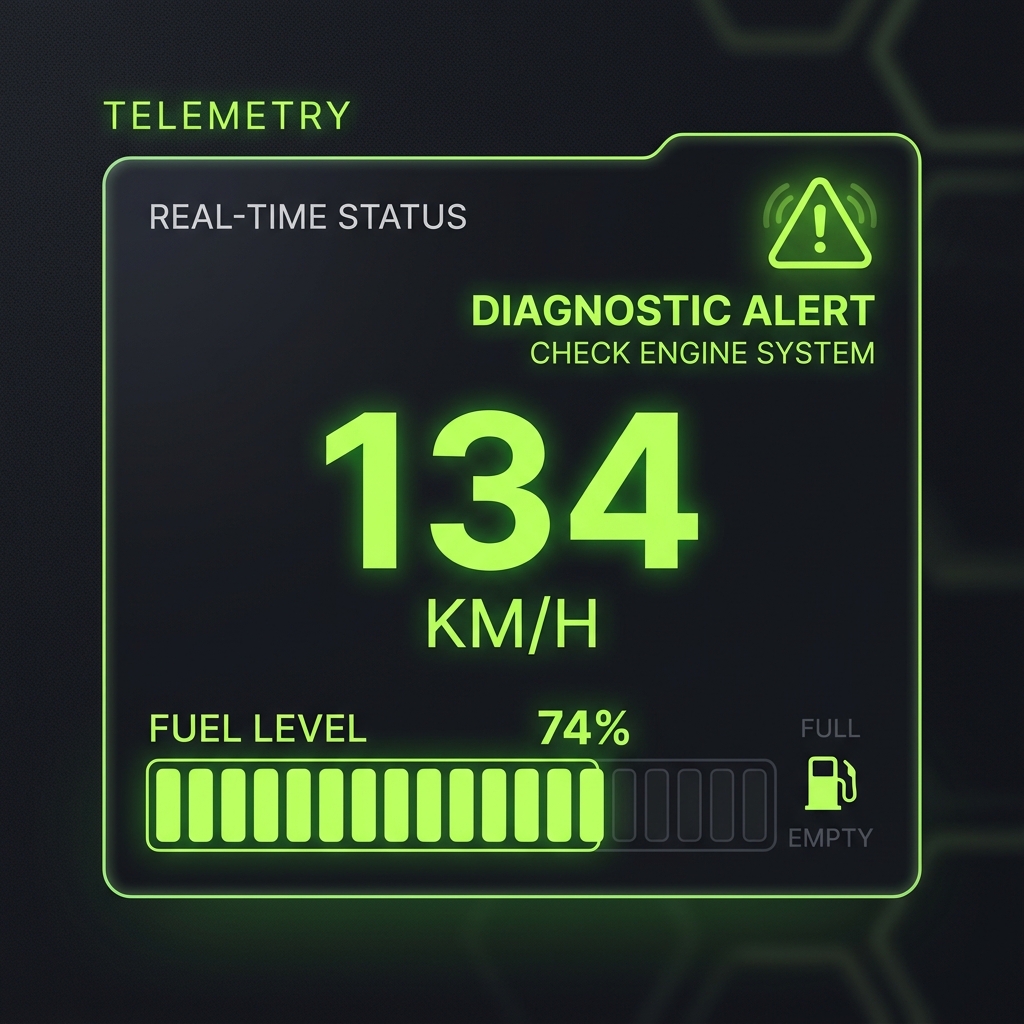
Driver Companion App
Designed for safety and minimal interaction.
- Voice-activated status reporting ("Log delay: Traffic").
- Massive, high-contrast touch targets for fallback use.
- Automated Hours of Service (HOS) tracking to ensure compliance.
- Offline-first architecture for areas with poor cellular coverage.
User Testing
During field tests with the voice-first driver app, we found that ambient cabin noise interfered with voice commands. We iterated by adding large, high-contrast touch targets for fallback input, ensuring usability even in noisy, bumpy environments.
Our testing took us inside truck cabins for active 4-hour shifts with 10 commercial drivers. We quickly realized that bumpy gravel roads made voice-activation unreliable due to microphone vibration. Shifting the fallback interaction to single-tap big cards lowered task completion time by 50%. For dispatchers, usability tests showed that showing all trucks on the map at once caused severe cognitive anxiety, which we addressed by adding filters to highlight only trucks with active delays or safety alerts.
Snippets
We implemented a customized map layer that visually emphasizes active truck paths while subduing irrelevant geographic features. This reduces visual noise and cognitive load for dispatchers tracking dozens of vehicles simultaneously, keeping the primary focus on high-priority routes.
Impact and Learnings
Designing for field operations taught us that high stakes environments require high contrast UI. By focusing on smart grouping and distraction-free driver modes, the fleet platform improved operations across the entire supply chain.
- • Reduced average dispatch triage response times by 30% during high-volume periods.
- • "Alert fatigue" decreased by 80% through intelligent status grouping algorithms.
- • Driver satisfaction scores with internal mobile tools rose by 45% within three months.
- • Improved routing efficiency and idle-time reduction resulted in an 18% fuel cost saving.
- • Learning: In operational tools, designing for the "exception" is far more critical than the "happy path." Systems must handle chaos and noisy environments gracefully.
What's Next?
We are planning future development cycles focused on predictive analytics and real-time automated rerouting.
Predictive Component Maintenance
Integrating ML sensor telemetry models to alert fleet managers to potential part failures before a truck breaks down in remote regions, reducing unexpected repair costs.
Real-Time Automated Rerouting
Developing AI dispatch algorithms that automatically suggest and execute optimal route adjustments based on live severe weather conditions and city traffic patterns.